Tuesday, 22nd of September 2026






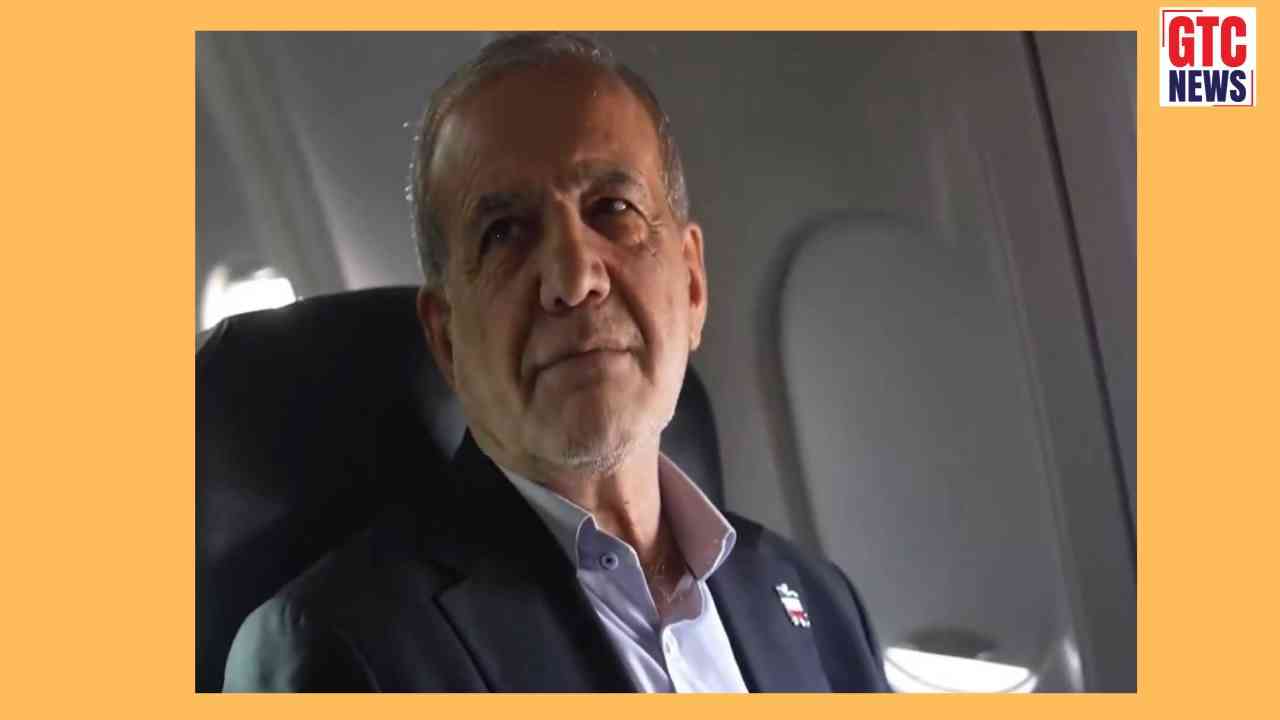
Iran President Pezeshkian en route to UNGA warns against regional oppression, calls for global trust
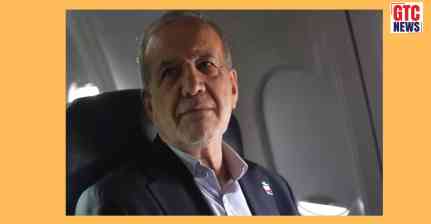
New York , September 22 (ANI): Iranian President Masoud Pezeshkian made strong remarks emphasising global awareness against regional oppression and advocating for international peace while travelling to New York to participate in the 81st session of the United Nations General Assembly (UNGA).
Stressing the necessity of global solidarity, President Pezeshkian stated, "The people of the world should become aware of the oppressive behaviours in the region; an assembly with the slogan 'Trust' should restore trust to the world and end the war and bloodshed."
Highlighting specific regional grievances ahead of international deliberations, he further added, "We will voice the oppression of the children of Minab and Lamerd."
The Iranian President embarked on this diplomatic mission on Tuesday morning, receiving an official send-off from First Vice President Mohammad Reza Aref, Deputy for International Affairs of the Supreme Leader's Office Hojjatoleslam Walmoslemin Mohsen Qomi, and a group of cabinet members, as reported by the Iranian news agency IRNA.
Elaborating on his agenda before leaving, President Pezeshkian stated, "We will forcefully raise Iran's positions in international forums. The issues we will raise at the United Nations are expressing the oppressed state of the Iranian nation, the crimes that have occurred, and the distrust that has been created. We went to the negotiating table several times and signed agreements, but unfortunately, the whole world saw how commitments were not fulfilled and the writings were trampled underfoot."
He is scheduled to address the General Assembly during the morning session on Wednesday, September 23. In addition to articulating Tehran's stance, he will hold bilateral meetings with attending heads of state, alongside separate interactions with educated Iranians residing in the United States, American elites, and think tanks.
Meanwhile, Iranian Foreign Minister Syed Abbas Araghchi arrived in New York on Monday local time. Speaking to reporters as he commenced his journey, Foreign Minister Araghchi emphasised that the high-level gathering offers a crucial platform to address how confidence in the international body has deteriorated and how it might be revived, according to IRNA.
Foreign Minister Araghchi stated, "It is natural that no other trust remains in an organisation that is under the influence of these countries. Therefore, an important issue is the restoring of trust, and it is a good opportunity to talk to the world about how trust in this United Nations has been lost and how it can be revived."
He further noted that defending national rights remains the foremost objective of the delegation, stating, "This visit is taking place after the inhumane war that has been waged against us by the United States and the Zionist regime, and the subsequent developments, and in truth, the situation that continues to exist as a war situation. And in the first place, it is natural that our most important goal is to be present in a large international forum, which is the United Nations, to defend the rights of the people of Iran, the rights of the people of Iran, and the interests of the people of Iran."
The 81st session of the UN General Assembly runs under the theme "Restoring Trust, Managing Transformation: A United Nations That Delivers for All." The high-level general debate is scheduled from September 22 to 26 and on September 28 in New York, featuring global leaders addressing critical international challenges alongside high-level meetings focused on climate action, development, sea-level rise, and pandemic preparedness.
Pezeshkian's appearance follows a year marked by escalating friction. During his address at the UN last year, held months after a 12-day joint US-Israeli bombing campaign directed at Iran's nuclear sites, he rejected claims that Tehran pursued nuclear weapons and blamed adversaries for derailing diplomatic efforts.
This year's visit takes place against a backdrop of persistent international friction surrounding Tehran's atomic programme and commercial shipping disruptions within the Strait of Hormuz. Furthermore, Iran faces ongoing international scrutiny over Red Sea vessel attacks carried out by Houthi forces based in Yemen.
US President Donald Trump, who is also slated to speak at the global body, has justified military actions against Tehran by labelling the nation the foremost state sponsor of terrorism globally and maintaining that it must be barred from acquiring nuclear capabilities. At the same time, President Trump has indicated an openness to holding a meeting with Pezeshkian while in New York.
Despite heightened diplomatic engagements surrounding the General Assembly, expectations for a breakthrough remain low. UN Secretary-General Antonio Guterres has noted that substantial negotiations between Washington and Tehran would likely need to occur outside of New York, and diplomats have pointed out that no formal talks are currently scheduled for the duration of the UN week.
According to a report by the Wall Street Journal (WSJ), Pezeshkian and his delegation will encounter stringent limitations during their stay in the United States. They will reportedly be permitted to commute solely between their Manhattan accommodation and the United Nations headquarters, barring any unrestricted movement throughout New York without prior authorisation.
The report noted that this exceptional protocol underscores the friction accompanying Pezeshkian's visit. While Washington has historically enforced constraints on Iranian diplomats, hosting the head of a state currently engaged in active hostilities during the General Assembly lacks substantial precedent, WSJ reported.
Sources familiar with the matter informed WSJ that the Iranian leader is concurrently pursuing discussions with analysts representing American and European think tanks during his time in New York.
Despite these dynamics, Tehran's leadership has historically leveraged the UN as a vital rostrum to contest American policy. In 1980, amidst the American hostage crisis in Tehran, an Iranian delegation utilised a UN appearance to denounce Iraq's invasion. Similarly, Soviet officials routinely exploited the General Assembly platform to critique Washington throughout the Cold War era. (ANI)
Source: ANI
 Read More...


 Add GTC NEWS on Google