Friday, 6th of November 2026






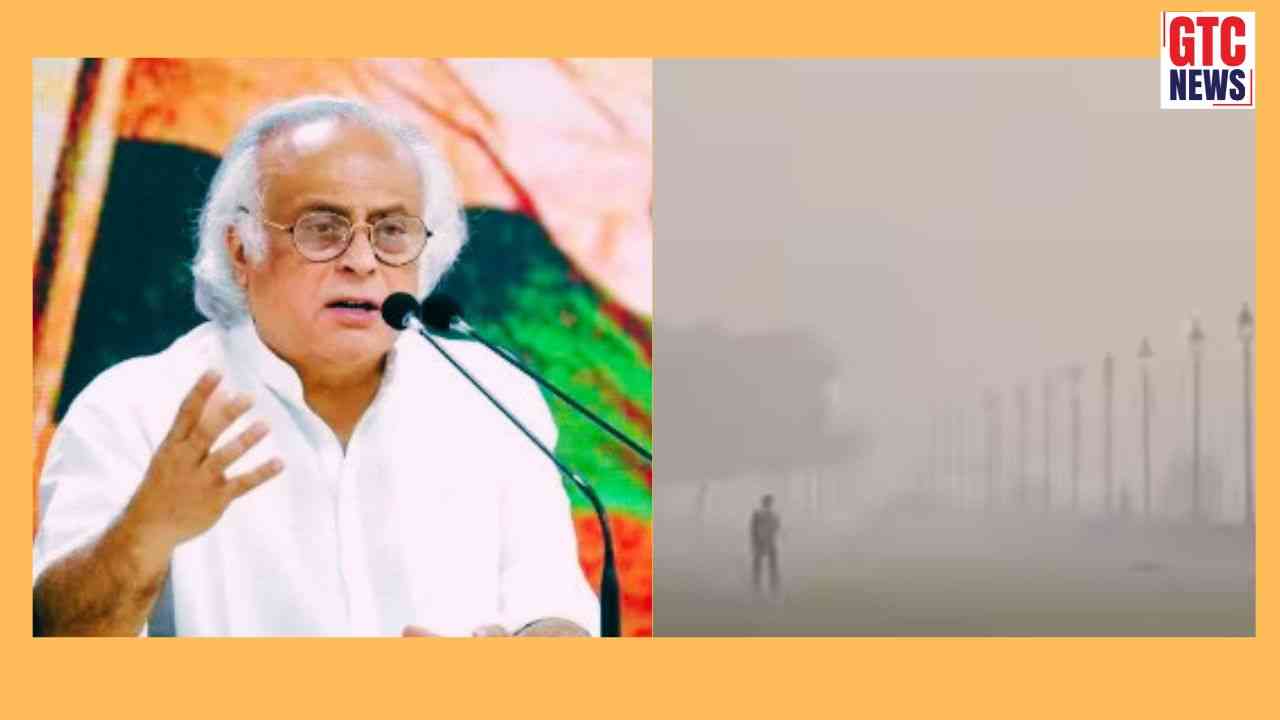
National Clean Air Programme need urgent revamp: Jairam Ramesh on rising air pollution
As pollution levels in the national capital meddle between "very poor" and "severe" categories, senior Congress leader Jairam Ramesh on Friday said the public health crisis was "even worse" in parts of north India. He called for an urgent revamp of the National Clean Air Programme that was initiated nearly eight years ago.
"The top three most polluted cities in India going by the monthly average PM2.5 concentration were in Uttar Pradesh--Baraut in Baghpat district, Khora in Ghaziabad district and Gajraula in Amroha district," Ramesh posted on X, citing a detailed analysis published by the Centre for Research on Energy and Clean Air (CREA) .
The Congress MP said 13 cities in UP, 11 cities in Haryana, three in Gujarat and two each in Madhya Pradesh, Punjab and Rajasthan exceeded the national ambient air quality standard for PM2.5 (24-hour mean), which is four times the WHO safety level.
On the basis of CREA's analysis, Ramesh argued that there was a need to control emissions from "industry, power generation and residential sources".
"CREA’s analysis very rightly suggests that it should now (i) control emissions from industry, power generation and residential sources; (ii) control directly emitted particulate matter; and (iii) address gaseous precursors responsible for secondary PM2.5 formation. An airshed-based approach needs to be followed," the Congress leader said.
"The National Ambient Air Quality Standards (NAAQS) were last promulgated in November 2009. They were acknowledged to be very progressive then—but now they need to be updated, especially the safe limits for PM2.5 concentrations," he added.
Delhi continues to grapple with hazardous air pollution, with the Air Quality Index (AQI) recorded at 389 for the entire city, categorised as 'Very Poor', as per the Central Pollution Control Board (CPCB) at 8 AM.
Several areas in the national capital recorded air quality in the 'severe' category. IIT Delhi and Rohini both recorded the AQI at 474, followed by Punjabi Bagh at 465, RK Puram at 443, ITO at 422, Firoz Shah Road at 420, and India Gate at 403, as per the CPCB data.
The Municipal authorities deploy truck-mounted water sprinklers to undertake water sprinkling operations as per the Stage-II Graded Response Action Plan (GRAP-II) enforced across India Gate. (ANI)
India’s air pollution crisis is no longer just a respiratory issue. It’s now a full-blown assault on our brains and bodies.
• In 2023, approx. 2 million deaths in India were linked to air pollution—a 43% jump since 2000
• Nearly 9 in 10 of these deaths were attributed to non-communicable diseases (NCDs) such as heart disease, lung cancer, diabetes and now even dementia
• India records around 186 air-pollution deaths per 100,000 people, over 10 times the rate in high-income countries (17/100,000).
• Air pollution accounts for about 70% of COPD (chronic obstructive pulmomary disease) deaths, about 33% of lung cancer deaths, about 25% of heart-disease deaths, and about 20% of diabetes deaths in India.
• Exposure to fine particulate matter measured in micrograms per cubic meter (PM2.5) has now also been linked to brain damage and accelerated cognitive decline; globally about 626,000 dementia deaths in 2023 were tied to air pollution.
Air pollution is a public-health catastrophe and a national-security threat to our society, our healthcare system, and our future workforce.
Our present standard for PM2.5 is 8 times the WHO guideline for annual exposure and 4 times the guideline for 24-hour exposure. Despite the launch of the National Clean Air Programme (NCAP) in 2017, PM2.5 levels have continued to rise and shockingly now every single person in India lives in areas where PM2.5 levels far exceeds the WHO guidelines.
We need to radically revise the NCAP and also urgently update the National Ambient Air Quality Standards (NAAQS) that were last promulgated after a careful exercise in Nov 2009.
https://t.co/gR6fzjlJ9S
— Jairam Ramesh (@Jairam_Ramesh) October 26, 2025







 Add GTC NEWS on Google